
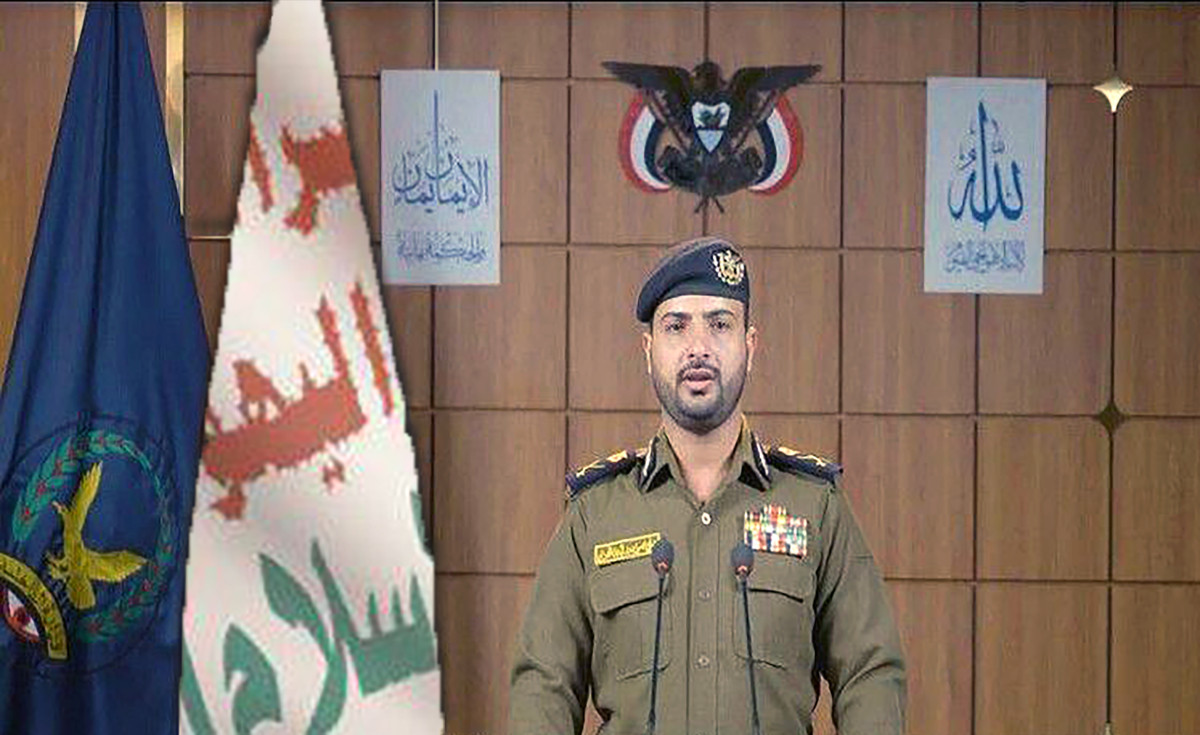
On 8 November 2025, the Houthi “Police Intelligence” apparatus [1] announced a high-profile security operation, codenamed “And the plotting of those – it will perish”, claiming to have dismantled a major espionage network comprising 22 individuals. This announcement was not an isolated event but the culmination of an intensive security campaign that had escalated since May 2024. According to the Houthis’ narrative, the network was allegedly directed from a joint intelligence operations centre involving the U.S. Central Intelligence Agency (CIA), the Israeli Mossad, and Saudi intelligence, with its command hub located on Saudi territory. The group asserted that the network’s primary objective was to undermine Houthi military capabilities, particularly missile and drone forces, and to target prominent political, military, and security leaders.
This analysis advances a central hypothesis: the “spy networks” narrative is not merely a propaganda device but a structural pillar of the Houthi governance model, which depends on the orchestration and management of perpetual crises. It serves as the primary mechanism through which external conflict is reframed as internal political capital, enabling the movement to pursue three interlinked objectives. First, it allows the conversion of security failures, most notably the targeted assassinations of senior figures in August 2025, into a propagandistic success that reinforces domestic cohesion. Second, it provides an ideological pretext for purging what remains of the civilian and humanitarian spheres, criminalising any independent voice under the rubric of combating “treasonous collaboration.” Third, it enables the exertion of calibrated pressure on the Kingdom of Saudi Arabia amid stalled negotiations, transforming the detainee file into a bargaining chip of strategic weight.
This analysis seeks to deconstruct these Houthi policies and to examine how the movement constructs a narrative of a “cosmic conspiracy” to advance its political and security agenda.
I. Underlying Strategic Motivations: Reframing the August 2025 Setback
In contemporary hybrid conflicts, narrative management has become as critical as the conduct of military operations itself. Armed actors such as the Houthis seek to dominate the informational space to convert tactical setbacks or security breaches into perceived moral victories. This strategy is essential for maintaining internal cohesion, legitimising continuous mobilisation, and keeping adversaries in a state of defensive uncertainty.
Deconstructing the official narrative advanced by the Houthis regarding the so-called “major espionage network” is a necessary step in uncovering the campaign’s underlying dimensions. An examination of the forces driving the security announcement reveals a multifaceted strategy designed to secure domestic and external gains that extend well beyond the purported intelligence achievement. By analysing the details of the declared narrative, it becomes possible to discern the campaign’s true motivations and to assess its broader implications.
The use of the campaign as a mechanism for managing major security failures and implementing a “paranoia management” strategy is one of its primary drivers. The November 2025 announcement served as a direct narrative counteroffensive aimed at absorbing the shock of significant intelligence breaches. In August 2025, an Israeli airstrike killed 11 senior Houthi officials, including the Prime Minister of the Houthi government, Ahmad al-Rahawi, [2]and critically wounded Chief of Staff Muhammad Abd al-Karim al-Ghamari, who later succumbed to his injuries in October 2025. This event, acknowledged by Houthi leadership as a “serious security breach”, represented a catastrophic intelligence failure. The setback went beyond the loss of one of the group’s most prominent leaders; it posed a direct challenge to its cultivated image of impenetrable security, thereby necessitating a carefully constructed narrative response to reframe the defeat.
The Israeli strikes that followed the August attack further deepened the crisis of confidence in the Houthi security apparatus, particularly the September 2025 operations, [3] which exposed the system’s vulnerabilities in countering sophisticated, high-tech intelligence activities. In the aftermath of these successive breaches, a climate of suspicion and disorientation permeated Houthi ranks, prompting Acting Prime Minister Mohammed Miftah to acknowledge a “serious security breach” and to affirm that they were confronting a “large intelligence apparatus.” [4] In immediate response, Houthi security agencies launched a wide-ranging arrest campaign on 31 August 2025, initially targeting United Nations staff and humanitarian aid workers on charges of espionage, before expanding to encompass anyone suspected of collaboration with external actors. [5] This suffocating security environment paved the way for the “spy network” announcement to function as an ideal scapegoat.
Constructing the “Cosmic Conspiracy”: Details of the Operation “And the plotting of those – it will perish”
The Houthi response to the security breach extended beyond conventional countermeasures, taking the form of a comprehensive counter-narrative. This narrative sought to manufacture a major intelligence victory capable of obscuring the catastrophic security failure and restoring confidence in the movement’s compromised security apparatus.
According to Houthi security announcements in November 2025, the network was described as operating under a “joint operations room” comprising the U.S. Central Intelligence Agency (CIA), the Israeli Mossad, and Saudi intelligence. The centre was alleged to be based in the Kingdom of Saudi Arabia, [6] thereby placing Riyadh at the heart of the purported “conspiracy” as the operational arm of the U.S.–Israeli project.
Houthi media subsequently broadcast a series of televised “confessions” by detainees, [7]presented as part of a carefully scripted scenario intended to dramatise the scale of the alleged “conspiracy.” The details of these claims can be summarised as follows:
|
Alleged Tactic |
Operational Description According to the Houthi Narrative |
|
Multi-layered Recruitment |
Exploiting economic hardship and public desperation by offering deceptive job opportunities under the cover of humanitarian and development organisations (such as the “Qudrah Organisation for Sustainable Development” and “Dar Al-Salaam Organisation (DASO)”), while leveraging personal relationships to execute assigned tasks. |
|
External Training |
Providing recruits with advanced training in multiple locations, most notably Riyadh, as well as Cairo and Addis Ababa, conducted by American, Israeli, and Saudi intelligence officers, alongside a British technical expert. |
|
Advanced Tools and Techniques |
Supplying the network with sophisticated espionage equipment, including miniature concealed cameras hidden inside everyday objects (such as car remote-control devices), network interception tools (sniffers) designed to capture Wi‑Fi data, and live video transmission systems. |
The granular details presented in the televised confessions served clear propagandistic purposes. Portraying the network as “high tech,” “transnational,” and involving major global intelligence agencies was intended to magnify the scale of the alleged “conspiracy” and, by extension, to inflate the perceived magnitude of the Houthis' security apparatus’s “victory.”
The selection of these details was far from arbitrary. The reference to a “British technical expert,” for instance, [8] was designed to confer a veneer of advanced Western technical credibility on the alleged “conspiracy,” thereby rendering the Houthis “victory” over it more dramatic. These cinematic elements were carefully crafted to align with pre-existing conspiracy narratives, producing a fabricated yet more persuasive sense of reality. Moreover, the network’s purported activities were linked to attempts to impede Houthi military operations under the pretext of supporting Gaza, framing the network as part of a broader campaign against the “Resistance Axis” and legitimising repressive measures as a defence of the Palestinian issue. This manufactured narrative enabled the group to reframe its own security failures.
Although the claims surrounding Operation “And the plotting of those – it will perish” were not directly linked to the Israeli strike that killed the Prime Minister of Yemen's Houthi government and his entourage, the announcement of the network was closely tied to U.S. and Israeli actions. It was deployed as a ready-made, persuasive explanation for the assassinations. Houthi leader Abdul Malik al-Houthi issued a direct accusation of “espionage cells” operating under the guise of humanitarian work, providing information and coordinates that facilitated the strike. [9] Specifically, direct allegations were levelled against the “Chief Security Officer at the UN World Food Programme (WFP)” for involvement in the operation.
This tightly constructed linkage completes the narrative circuit, transforming the defeat resulting from the security breach into a “pre-emptive victory” embodied in the exposure of the alleged perpetrators. Thus, the spy-network narrative functioned not only as a retroactive justification for a catastrophic failure but also as a pre-emptive licence for the systematic dismantling of what remains of civil society in Yemen.
II. Politicising Relief and Purging the Civil Sphere (Repression under the Guise of Security)
Following the reframing of its security failure, the movement turned its focus inward, exploiting the espionage narrative to conduct a systematic campaign of repression targeting all entities possessing any degree of autonomy, including the relief sector, civil society, and academia.
Over the past three years, at a minimum, the accusation of “espionage” has been the preferred and most effective instrument for legitimising systematic repression against any independent voice or activity that falls outside the group’s narrative and ideology. [10] Through this charge, humanitarian, media, and rights-based work is transformed from a neutral and essential endeavour into a suspect activity serving the “enemy,” thereby providing a veneer of legal justification for purging the civil sphere and consolidating absolute control.
- Politicising Relief
Between May and October 2025, the campaign of arrests targeting Yemeni staff within United Nations agencies and international organisations escalated to unprecedented levels. By the end of October 2025, the Houthis were detaining 59 UN personnel, [11] with espionage charges threatened against 43 of them. The campaign encompassed major organisations, including the UN World Food Programme (WFP), the United Nations Children's Fund (UNICEF), the World Health Organisation (WHO), and the United Nations Office for the Coordination of Humanitarian Affairs (OCHA). [12]
The Houthi campaign against relief operations resulted in the near-total paralysis of humanitarian activity in areas under their control, prompting major organisations such as the UN World Food Programme (WFP) [13] and the World Health Organisation (WHO) to suspend critical programmes, while the United Nations relocated its humanitarian hub from Sana’a to Aden. Tactically, these measures sought to convert detained staff and disrupted humanitarian operations into “low-cost bargaining chips,” generating direct leverage over the international community and donor states to extract political or financial concessions.
Because suspending relief operations risks provoking widespread anger amid a deepening hunger crisis[14].This time, affecting even the group’s own supporters, who constitute its largest beneficiaries, a propagandistic narrative became necessary to link the activities of these organisations to the greater loss, namely the assassinations and their alleged direct involvement in the killing of the Prime Minister of Yemen’s Houthi government. Houthi leader Abdul Malik al-Houthi conferred significance and legitimacy on this campaign in his 16 October address, explicitly accusing the organisations of functioning as a “cover for espionage” and asserting that they were “penetrated by Americans and Israelis.” [15] In response, UN Secretary-General António Guterres issued a statement “categorically rejecting all such allegations,” describing them as “serious and entirely unacceptable.”[16]
The Houthis transformed the “espionage” narrative into a direct weapon against humanitarian organisations, enabling them to justify a wide-ranging campaign of repression aimed not at safeguarding national security but at consolidating complete control over aid flows and leveraging them as a political bargaining tool against the international community. Meanwhile, the UN envoy’s office effectively legitimised Houthis conduct by establishing a dedicated negotiation team on the issue of detainees accused of “involvement in spy cells,” representing a de facto acknowledgement by the international organisation of a negotiation track over the price to be paid to the Houthis for the safety of its personnel. [17]
- Purging the Civil Sphere
The “espionage accusation” strategy was not limited to the humanitarian sector; it served as a cover for implementing a comprehensive and systematic campaign aimed at silencing all independent voices and dismantling any societal or political structures capable of challenging the Houthis absolute authority. The security apparatus was deployed to carry out targeted actions against various segments of civil and political society, with the charge of “collaboration” readily applied to anyone who dared to express dissenting opinions.
In the same context, the group expanded its violations to target human rights defenders, journalists, and academics. Documented abuses included arbitrary detention, enforced disappearance, and torture. The kidnapping of lawyer Abdulmajid Sabra in September 2025, [18] followed by the abduction of prominent Professor of Sociology Dr. Hamoud al-Awdi (76 years old) and his two companions in November, [19] served as a clear indicator of the group’s deliberate targeting of the intellectual and civic elite. This action is not random; it forms part of a systematic dismantling of the remaining independent think tanks that continue to operate in Sana’a on personal initiative, and that could serve as a foundation for independent calls for peace in areas under the group’s control, calls that neither conform to nor serve its ideology and interests. Vague security charges, particularly those related to “espionage,” are being used to legitimise the detention of figures with no military involvement and to send an explicit message of intimidation to the remaining elite.
In addition to purging the intellectual elite, the movement sought to dominate the historical narrative. The detention of civilians for commemorating the 26th of September Revolution underscores the group’s aim to control not only the contemporary political sphere but also the collective memory of Yemenis and the republican narrative, which stands in direct contradiction to the group’s sectarian agenda.
The Theatre of Coerced Confessions: A Tool of Psychological Intimidation
The broadcasting of “confessions” [20] functions as an illicit strategic instrument designed to manage fear and consolidate internal control. Televised confessions extracted under torture transcend the objective of criminal evidence, particularly as the judiciary operates under the group’s authority, and instead serve a primarily psychological function: collective intimidation. These broadcasts instil fear within the “home front” and demonstrate that the Houthi security apparatus is not only formidable but also capable of detecting and dismantling even the most sophisticated conspiracies, thereby reinforcing public confidence in the official narrative and raising the costs of dissent.
Moreover, the public humiliation of detainees serves as a warning to anyone contemplating defiance of Houthi authority. By openly demonising individuals on television, society becomes a self-policing network, eroding trust among citizens and effectively eliminating the possibility of organising local civil resistance or communicating with members of the group’s opponents, even when they are friends or relatives.
The strategic purpose of these practices is to reinforce the group’s internal iron grip. By portraying itself as capable of dismantling a complex network allegedly managed by a U.S.–Israeli–Saudi coalition, major security breaches are reframed as an “intelligence victory.” This media-driven deployment of repression legitimises a governance model predicated on mobilisation and the “securitisation of society,” while bolstering the image of the group’s leadership as the protector of the nation against a “cosmic conspiracy,” thereby entrenching its absolute and unaccountable authority.
III. The Regional Pressure Card: Targeting Saudi Arabia at the Heart of the Narrative
Within the context of coercive diplomacy, armed groups employ intelligence-related accusations as a tool to raise the political costs for their regional adversaries and to complicate negotiation tracks. However, the Houthis’ recent announcement goes beyond a bilateral tactic; it represents a paradigmatic application of the Iranian “Resistance Axis” doctrine, aimed at exhausting the United States and its partners in “protracted and open conflicts” while intensifying regional hostility toward their presence.
The explicit accusation that Saudi Arabia is hosting the “joint operations room” and training agents on its territory is not a passing claim; rather, it is a deliberate and strategic message intended to politically and diplomatically embarrass Riyadh and to increase the cost of any future covert intelligence cooperation that may target Houthi leadership. Through this approach, the Houthis seek to impose a new equation: any security success achieved against them will be met with public political exposure that undermines Riyadh’s negotiating position.
The timing of the announcement coincided with the faltering of negotiations over the “roadmap” for peace in Muscat, where the Houthis are using the “espionage card” to pressure Saudi Arabia on unresolved and critical files, such as the issue of paying public-sector salaries and easing the impact of United States sanctions on the group and the areas under its control following their designation as a terrorist organisation. More importantly, the detainees’ files, particularly those of United Nations employees, have been transformed into high-value bargaining chips that can be used to extract economic and political concessions as a precondition for any progress in the peace process.
Linking Riyadh publicly to intelligence cooperation with Washington and Tel Aviv serves a secondary objective: weakening the Saudi position regionally, particularly in the context of the Palestinian issue. The Houthis exploit this linkage to reinforce their narrative as a force of “resistance” while portraying Saudi Arabia as a partner in the “American-Zionist axis.” This tactic not only advances the Houthis’ propagandistic agenda but also aligns seamlessly with Iran’s broader strategy of intensifying regional hostility toward its adversaries, who are partners of the United States, and of portraying the United States’ presence as a source of chaos rather than stability.
IV: The Strategic Significance of Presenting “Police Intelligence” [21]
The selection of the “Police Intelligence Service,” headed by Ali Hussein al-Houthi (the son of the movement’s founder), to serve as the public face announcing the “major security achievement” represented in the “And the plotting of those – it will perish” operation was not incidental. Instead, it reflects the movement’s internal power balances and carries strategic implications regarding the evolution of its power structure and the messages intended for both internal and external audiences:
First, the move aims to legitimise the newly formed apparatus, demonstrate its effectiveness, and present it as superior to the traditional security services, framing it as a pre-emptive force capable of confronting “complex intelligence warfare.”
Second, the move consolidates the Houthi family's influence. By spotlighting the leadership of Ali Hussein al-Houthi—son of the movement’s founder—over an apparatus that is nominally under the Yemeni Ministry of Interior (MOI), and by emphasising his connection to the Minister of Interior, Abdulkarim al-Houthi (his father’s uncle), the group underscores the continued concentration of security power within the most loyal and trusted inner circle. Similarly, military authority remains centralised in the most loyal faction, as reflected in the appointment of “Yusuf al-Madani” as Chief of the General Staff following al-Ghamari’s assassination; al-Madani is the husband of Ali Hussein al-Houthi’s sister. [22]
Third, this public appearance highlights a carefully calibrated elevation of the second generation of the Houthi family into the core of the security apparatus, representing a crucial step toward strengthening their authority and entrenching their influence within the movement’s most sensitive structures. This strategic arrangement aims to secure hereditary succession and ensure that any future contestation over leadership is decisively settled in favour of the inner circle, thereby reassuring loyalists and senior figures within the movement that the potential death of the group’s leader would not trigger internal power struggles within the Houthi family.
Following the security failure that significantly undermined the group’s standing among its supporters, it became essential to present rapid and convincing proof of the security services’ competence. The announcement of the “discovery” of the spy network and the emphasis on its use of advanced equipment served this purpose perfectly. Promoting the Police Intelligence Directorate as capable of confronting “modern threats” (both digital and intelligence-driven) seeks to legitimise the family’s monopoly over power and repression. Rather than allowing the group to appear infiltrated and weak, the narrative recasts it as a strong and capable system that has succeeded in restoring “security and stability,” thereby reinforcing the religious and political legitimacy of the current leadership.
This development goes beyond the mere elevation of a new generation; it signals potential fractures within the security apparatus. Reports indicate that the “Police Intelligence Service” has begun imposing “liaison officers” [23] on private security companies, creating a parallel structure to the main Security and Intelligence Service. This announcement can be interpreted as part of an internal power struggle between competing security wings. This evolution raises critical strategic questions: Does this struggle create new centres of power? Does it indicate a lack of trust within the Houthi elite? And does it open new security gaps that adversaries may be able to exploit?
Conclusion
The Houthis’ deployment of the “espionage card” represents a tactical element within a comprehensive strategy aimed at reshaping the rules of the game both domestically and regionally. Through this approach, the Houthis seek to convert vulnerabilities, such as security breaches and the crippling economic crisis, which have provoked widespread anger, into fuel for consolidating internal control and enhancing their negotiating leverage. This is achieved by redirecting domestic public frustration toward the “external conspiracy” and its alleged agents, thereby entrenching a totalitarian governance model based on repression and crisis management through fabricated conspiracies and the purging of the civil sphere, rendering any local actor vulnerable to accusations of collaboration.
This strategy poses an existential threat to humanitarian operations and civil space, criminalising local staff and transforming them into “spies” as a permanent bargaining chip to extort the international community and extract political and financial concessions. Moreover, this propagandistic escalation heightens mistrust and complicates international mediation efforts, particularly with Saudi Arabia, as the Houthis convert security-related issues into preconditions for any political progress, raising the stakes and rendering a comprehensive settlement increasingly difficult.
[1] صنعاء تعلن تفكيك شبكة تجسسية تعمل لمصلحة الاستخبارات الأميركية والإسرائيلية والسعودية https://tn.ai/3442901
[2] مقتل رئيس وزراء حكومة الحوثي اليمنية في غارة إسرائيلية https://www.al-monitor.com/originals/2025/08/prime-minister-yemens-houthi-government-killed-israeli-strike
[3] الحوثيون يؤكدون مقتل رئيس الحكومة أحمد الرهوي و10 قيادات في غارة إسرائيلية استهدفت اجتماعًا سريًا https://www.aljazeera.net/news/2025/8/30/houthi-pm-killed-israeli-strike
[4] محمد مفتاح في أول اجتماع للحكومة بعد اغتيال الرهوي: نواجه "منظومة استخباراتية كبيرة" والخرق الأمني لن يمر دون محاسبة https://www.al-akhbar.com/Yemen/2025/09/02/Muftah-Security-Breach-Statement
[5] الأمم المتحدة تدين بشدة اعتقال موظفيها في اليمن وتطالب بالإفراج الفوري عنهم دون شروط https://news.un.org/ar/story/2025/09/1158241
مصادر حقوقية في صنعاء: حملة 31 أغسطس الأمنية هي الأوسع منذ سنوات وتستهدف "تطهير" المنظمات الدولية https://www.alaraby.co.uk/politics/yemen-sanaa-security-campaign-august-2025
[6] تفاصيل عملية "ومكر أولئك هو يبور": وزارة الداخلية تكشف عن غرفة عمليات مشتركة (أمريكية - إسرائيلية - سعودية) تدير الشبكة من الرياض https://www.almasirah.net.ye/post/2025/11/08/details-spy-network-riyadh
[7] شاهد: اعترافات تفصيلية لأعضاء خلية "ومكر أولئك هو يبور" تكشف ارتباطهم بضباط مخابرات في الرياض وتل أبيب https://www.alalam.ir/news/6789012/yemen-spy-network-confessions
[8] أحد الاعترافات المنشورة في فيديو الاعترافات قناة المسيرة 8/11/2025
[9] زعيم الحوثيين يتهم موظفي الأمم المتحدة بالتجسس والانخراط في أنشطة عدائية؛ وغوتيريش يرفض الاتهامات ويصفها بالتهديد الخطير - (WCYS)https://wcys.org/houthi-leader-accuses-un-staff-of-spying-and-engaging-in-hostile-activities-guterres-rejects-allegations-as-serious-threat/
[10]اعتقالات الحوثيين تضع قطاع الإغاثة أمام خيارات قاسية - مركز صنعاء للدراسات الاستراتيجية https://sanaacenter.org/publications/main-publications/24213
[11] الإسكات بالقوة: الانتهاكات الممنهجة للحوثيين ضد المدافعين عن حقوق الإنسان في اليمن - منظمة "هيومينا" لحقوق الإنسان https://humena.org/yemen-silence-by-force-2025
[12] الحوثيون يعتقلون أعضاء مزعومين في "شبكة تجسس" سعودية-أمريكية-إسرائيلية - مؤسسة الدفاع عن الديمقراطيات (FDD) https://www.fdd.org/analysis/2025/11/10/houthis-arrest-alleged-members-of-saudi-american-israeli-spy-ring/
[13] تقرير الوضع في اليمن الصادر عن برنامج الأغذية العالمي (WFP) رقم 10، 16 نوفمبر/تشرين الثاني 2025 https://reliefweb.int/report/yemen/wfp-yemen-situation-report-10-16-november-2025
[14] تقرير الرصد المشترك لليمن: تحديث كل شهرين حول مخاطر أزمات الأمن الغذائي والتغذية (نوفمبر/تشرين الثاني 2025، العدد 11) https://reliefweb.int/report/yemen/yemen-joint-monitoring-report-bimonthly-update-food-and-nutrition-security-crisis-risks-november-2025-no-11
[15] السيد القائد في كلمته الأسبوعية: المنظمات الدولية أصبحت "واجهات استخباراتية" للعدو وتعمل بتوجيه أمريكي مباشر https://www.almasirah.net.ye/post/2025/10/16/leader-speech-ngo-spies
[16] بيان منسوب للمتحدث باسم الأمين العام: غوتيريش يرفض اتهامات الحوثيين "بشكل قاطع" ويصفها بالخطيرة https://news.un.org/ar/story/2025/10/1160042
[17] المعتقلون الأمميون كأوراق استراتيجية.. كيف أجبر الحوثيون الأمم المتحدة على شرعنة “مسار الابتزاز”؟ -تحليل خاصhttps://www.yemenmonitor.com/Details/ArtMID/908/ArticleID/154030
[18] هيومن رايتس ووتش: السلطات الحوثية تعتقل محامي حقوق الإنسان عبد المجيد صبرة وتخفيه قسرياً https://www.hrw.org/ar/news/2025/10/15/yemen-human-rights-lawyer-arrested
[19] منظمة "سام" للحقوق والحريات: احتجاز الدكتور حمود العودي ورفيقيه (أنور شعب وعبدالرحمن العلفي) تصعيد خطير ضد الرموز الفكرية https://www.samrl.org/news/2025/11/10/detention-of-academic-hamoud-aloudi
[20] نص اعترافات الخلية التجسسية: مهام تنوعت بين الرصد العسكري، واختراق المؤسسات الرسمية، ونشر الحرب الناعمة https://www.saba.ye/ar/news3371550.htm
[21] ظهر علي حسين الحوثي في مقطع الفيديو الذي أعلن عن تنفيذ العملية: https://x.com/TvAlmasirah/status/1987143621225902226
[22] الجنرال الذي لا يرتدي “الكتاف” رئيسا للأركان.. كيف تصنع “عائلة الحوثي” جنرالاتها؟https://www.yemenmonitor.com/Details/ArtMID/908/ArticleID/152831
[23] استخبارات الشرطة تفرض "ضباط ارتباط" على شركات الحراسة الأمنية في إطار الصراع مع جهاز الأمن والمخابرات https://alnkkar.com/details/police-intelligence-security-firms