
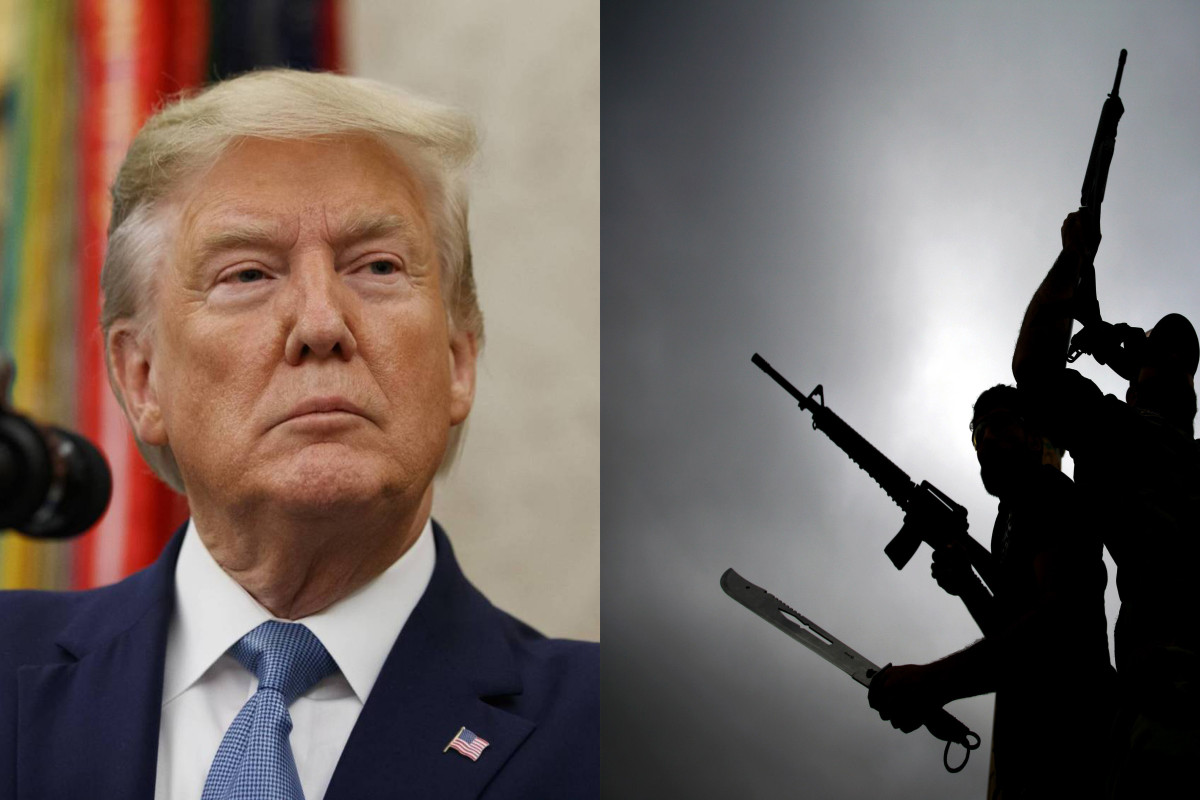
Before US President Donald Trump signed an executive order designating the Muslim Brotherhood and several of its affiliates in Lebanon, Egypt, and Jordan as Foreign Terrorist Organisations (FTOs)[1], Congress had introduced a bill in July 2025. This bill called for designating the group as an FTO and required the U.S. administration to submit annual reports on the activities of its branches in several countries, including Yemen, to monitor their international political and security impact.[2]
This U.S. trajectory was preceded by years of escalating regional political discourse and action concerning the prohibition of the Muslim Brotherhood's activities in several Arab countries. This regional scrutiny provided the primary incentive for certain political Islamic organisations, including the Al-Islah Party (formally known as the Yemeni Congregation for Reform), to adopt a cautious approach toward any indications linking them to the International Muslim Brotherhood Organisation.
Consequently, the party's leadership promptly moved to adopt narratives that denied the party's connection to the Muslim Brotherhood organisation[3], although internal disagreements exist among its leaders regarding the realism of this denial.
This article provides an analysis of the U.S. approach and the regional and European oversight of the Muslim Brotherhood organisation and its affiliates. Moreover, it explores where Al-Islah Party stands amidst these rapid shifts
.
From the Middle East to Europe: Intensified Scrutiny of Muslim Brotherhood Affiliates
Several nations, including Egypt, Saudi Arabia, the UAE, and, most recently, Jordan, have adopted policies to ban the organisation and prosecute its leadership.[4] By contrast, European countries regard the activities of institutions and associations affiliated with the Muslim Brotherhood with extreme caution. Over the past few years, some European Union member states have proceeded to ban the group and its associated societies.
This heightened scrutiny comes amid increasing prospects for a fundamental shift in European approaches, particularly following the events of October 7, 2023. This context has fueled growing demands from some European parliamentarians to include associations and affiliates financially and ideologically linked to the Muslim Brotherhood in countries like Germany and others on the list of terrorist organisations. [5]
In this context, the Radicalisation Awareness Network (RAN) cautioned against undesirable foreign funding directed toward associations and entities affiliated with the Muslim Brotherhood in certain European Union member states. Notably, it indicated that these associations rely on intermediary strategies to achieve their objectives, employing penetration tactics within various institutions across Europe. [6]
In its 2023 report, the European Union-affiliated Network (RAN) concluded that several associations, such as the Islamic Relief Germany (IRG), the Islamic Culture & Education Association in Poland (LM), the Islamic Association in Sweden (IFiS), and other groups monitored by the Network, are utilising foreign funding to support the activities of the Muslim Brotherhood. This includes disseminating their ideas and influencing Muslim communities through narratives of injustice. The report warned that this lack of financial transparency poses a threat to Europe's security. [7]
In Germany, authorities decided to ban the Islamisches Zentrum “Al-Salam” (IZAS) in the state of Brandenburg. The State Federal Ministry of the Interior stated that the association was directed against the concept of understanding among peoples and the constitutional order, adding that it is considered part of the Muslim Brotherhood spectrum and also linked to Hamas, which is designated as a terrorist organisation by both Germany and the European Union. [8]
In the same context, French President Emmanuel Macron directed his government to develop proposals for addressing the influence of the Muslim Brotherhood and the spread of "Islamism" in France. This move followed reports that warned the group constitutes a "threat to national cohesion" in the country. [9]
In 2021, Austria enacted a law banning the Muslim Brotherhood and its activities in the country. This legislation granted Austrian authorities broader powers to monitor and control Islamic associations and groups.
The law includes a prohibition on the display of the Muslim Brotherhood's slogans and publications, stipulating that the possession or distribution of associated propaganda is a criminal offence punishable by a fine of up to €4,000 or one month's imprisonment. This law marks the first official ban on the Muslim Brotherhood's activities in a member state of the European Union. [10]
Proceeding from these data points, while the European actions may appear temporarily divergent from the U.S. approach, under President Trump's administration, and that of several Arab states toward designating the Muslim Brotherhood organisation and its affiliates as FTOs, they simultaneously indicate that any future unified designation may not face significant legal or bureaucratic obstacles.
As the matter is intrinsically tied to international alliances and interests driven by security, social, and cultural concerns. Moreover, the process is shaped by domestic political pressures within EU member states related to the repeated warnings raised by numerous right-wing European politicians and leaders who oppose migration policies originating from conflict zones, particularly the Middle East, based on what they term the attempted "Islamization of Europe".[11]
This suggests that the new American trajectory, the preceding approach of several Arab nations, and Austria's policy in recent years will gradually be reflected in the overall European approach to proscribing and designating the organisation, its affiliates, and its leadership.
This impact is likely, particularly given the increasing scrutiny of associations and individuals linked to the Brotherhood within several EU member states, and the heightened focus on funding, organisational structure, and cross-border ideological relationships (transnational ideological ties).
Contradictory Statements from Al-Islah Leadership on Ties to the International Organisation
Even though the Islah Party has adopted a political discourse suggesting a break with the Muslim Brotherhood’s international organisation, and has denied any affiliation since 2013, again in 2016, and then in 2018[12], and most recently in September 2025, when Mohamed Al-Yadoumi, head of the Yemeni Islah Party's Supreme Council, renewed his denial of any link between his party and the International Muslim Brotherhood Organisation.
But the party's key founder and former Chairman of the Supreme Authority, Sheikh Abdullah bin Hussein Al-Ahmar, confirmed the connection in his memoirs published in 2007. Al-Ahmar asserted that the Al-Islah Party is an extension of the Muslim Brotherhood movement and the Islamic movement in the country, stating:
"We established the Yemeni Congregation for Reform [Al-Islah], while there was already an organisation, the Muslim Brotherhood, which we made an internal nucleus within the Congregation, possessing the precise organisation, political and ideological outlook, and intellectual nurturing." [13]
Similarly, the former Chairman of the Al-Islah Party's Shura Council, Abdul Majeed Al-Zindani, confirmed in a special interview on Al Jazeera that "the spirit of the Islamic Movement in Yemen (the Arab Islamic Vanguard Movement) was inspired by the Muslim Brotherhood".[14]
Tracing the historical formation of the Al-Islah Party, several studies, most notably one published by the Centre for Arab Unity Studies, indicate that the Islamic Vanguard Movement was the first nucleus of the Muslim Brotherhood Organisation in Yemen. This Organisation flourished during the 1970s and 1980s, and its members formed the foundational core upon which the Yemeni Congregation for Reform (Al-Islah Party) was publicly announced in September 1990. [15]
The study further adds: "The historical roots of the Yemeni Congregation for Reform, the representative of the Muslim Brotherhood movement in Yemen, extend to the very beginning of the Yemeni renewal and reform movement, at the hands of numerous distinguished reformers, such as Ibn Al-Wazir, Zaid Al-Moushaki, Muhammad Mahmoud Al-Zubairi, and others". [16]
Accordingly, the recurrent denial by the Al-Islah Party leadership of its connection to the Muslim Brotherhood Organisation is viewed as a tactic to protect the party's political standing and local gains amidst these international shifts.
This denial reflects strategies of political adaptation rather than a structural transformation in the party's Organisational form, identity, or financial activity. This recurrent denial, in fact, does not align with the historical and intellectual dimensions of the party's founding, according to the arguments and activities cited by the early founders, which clearly affirmed that the Muslim Brotherhood movement was an internal nucleus of the Islah Party, formed from the broader Islamic movement in Yemen.
Leaders of the Al-Islah Party on the U.S Treasury Sanctions List and UN Security Council Resolutions
In July 2024, the United States imposed sanctions on Hamid Al-Ahmar, a member of Al-Islah's Supreme Authority and Chairman of the Executive Office of the party's branch in Amran Governorate, targeting nine companies he owns.
According to the Department of the Treasury's statement, the sanctions included listing Al-Ahmar as a Specially Designated Global Terrorist (SDGT). The Office of Foreign Assets Control (OFAC) of the U.S. Department of the Treasury confirmed that Al-Ahmar’s designation was due to his support for the Hamas movement with a sum of $500 million. The statement further noted that since 2013, Al-Ahmar had chaired a foundation affiliated with the Hamas movement based in Lebanon, which had previously been included on the sanctions list in 2012. [17]
In February 2004, the U.S. Department of the Treasury issued a resolution designating Abdul Majeed Al-Zindani, the Chairman of the Al-Islah Party’s Shura Council (who died in April 2024), as an SDGT. The Department stated that Al-Zindani had a long history of working with Osama bin Laden, the former leader of Al-Qaeda, and that he was considered one of his spiritual leaders. It also pointed to his connection with the Al-Qaeda-linked Organisation Ansar al-Islam, including participation in assassination operations, most notably the murder of three American missionaries. [18]
In the same year (2004), the UN Security Council listed Abdul Majeed Al-Zindani among the individuals associated with Al-Qaeda under Resolution 1526. [19] According to the Council's resolution, Al-Zindani's designation was based on several reasons, including: providing support and funding for Al-Qaeda's activities; participating in the planning of the Organisation’s operations; recruiting personnel for the Organisation; and supporting associated entities, including its branches in the Arabian Peninsula.
Furthermore, the resolution noted that Al-Zindani exploited his position as an influential religious cleric to disseminate Al-Qaeda’s ideology and support its objectives.
Conclusion
It is evident that the Al-Islah Party, despite not being explicitly included among the affiliates targeted by President Trump in his recent executive order concerning Muslim Brotherhood affiliates, remains vulnerable to potential future repercussions. The new U.S. strategy, which designates the parent Organisation’s affiliates as Foreign Terrorist Organisations and considers them a direct threat to the interests of the United States and its partners in the region, creates a regulatory environment that keeps the party and its leadership within the scope of intense monitoring and surveillance.
The announcement of President Trump’s recent executive order, coupled with statements issued by the U.S. Congress and the Department of the Treasury, can be viewed as a clear indication that the U.S. administration will continue to treat the Muslim Brotherhood group in the Middle East, Africa, and other countries, including Yemen, as a network-based Organisation. [20]
This means the administration will continue to evaluate, to varying degrees, the financial, intellectual, and Organisational ties and activities between potential affiliates. Consequently, any current aligned with the movement is subject to scrutiny, particularly if it includes an abundant record of leaders and figures who have been designated on U.S. and UN sanctions lists.
In light of the preceding analysis, the position of the Al-Islah Party remains relatively unchanged. It can be argued that the party is effectively facing two possible paths; the first requires it to continue providing reassurances while realistically denying any connection to the International Muslim Brotherhood Organisation. This necessitates that the party undertake a transformation into a defined institutional framework with a clear identity and methodology. Furthermore, this path demands strengthening transparency in its funding sources and financial activities, re-evaluating the status of its leaders and members currently designated on sanctions lists, and establishing a broader, more firmly rooted local and regional consensus.
The second involves facing more complex political repercussions, potentially leading the U.S. administration to broaden its designation of affiliates to include the Party or key figures within it. This path depends on a combination of factors, most importantly, the collection of additional intelligence evidence on the financial and political activities linked to support for external entities. This is weighed alongside local and regional pressures and the assessment of the political, humanitarian, and human rights violations situation in several Yemeni governorates.
[1] White House, “Designation of Certain Muslim Brotherhood Chapters as Foreign Terrorist Organizations,” Presidential Actions, 24 Nov 2025. https://bit.ly/4rsmrPh
[2] S.2293 – Muslim Brotherhood Terrorist Designation Act, U.S. Congress, introduced July 15, 2025.https://www.congress.gov/bill/119th-congress/senate-bill/2293/text
[3] زعيم حزب الإصلاح اليمني يدعو لمصالحة وطنية وينفي العلاقة بـ"الإخوان"
https://bit.ly/4omHwbi
[4] Jordan bans Muslim Brotherhood after arrests over attack plots,” BBC News, 24 Apr 2025.https://www.bbc.com/news/articles/cn4w8prpkepo?xt
[5] European Parliament, "Entities linked to the Muslim Brotherhood on EU terrorist list," 29 July 2025. https://bit.ly/4olgLUt
[6] RAN, Undesirable Foreign Funding of Extremism in EU Countries, Thematic Research Meeting, 31 March 2023.
[7] نفس المصدر السابق https://bit.ly/48aCFVQ
[8] DW، "ألمانيا ـ حظر جمعية إسلامية في ولاية براندنبورغ، 12 سبتمبر 2024.
https://bit.ly/4p2mgIS
[9] MC مونت كارلو الدولية، "ماكرون يدعو إلى التحرّك ضد جماعة الإخوان المسلمين" 21 مايو 2025
https://bit.ly/3M0vZRw
[10] European Parliament, "Anti-terror law in Austria," 20 July 2021. https://bit.ly/4ahDOw4
[11] Geert Wilders on Europe’s Forced Islamization,” Hungary Today, May 30, 2025 .https://bit.ly/3XmTRB7
[12] نفس المصدر في المقدمة https://bit.ly/4omHwbi
[13] مذكرات الشيخ عبدالله بن حسين الأحمر، قضايا ومواقف، الأفق للطباعة والنشر، صنعاء، 2008، ص. 256
[14] عبد المجيد الزنداني. جهاد لتطبيق الشريعة. قناة الجزيرة، برنامج «زيارة خاصة». 28/3/2007 https://bit.ly/4peUSaT
[15] عبد القوي حسان. الحركة الإسلامية في اليمن (دراسة في الفكر والممارسة): التجمع اليمني للإصلاح نموذجًا. مركز دراسات الوحدة العربية، يوليو 2014، ص.91.
[16] نفس المصدر، ص. 88
[17] U.S. Department of the Treasury, “Treasury Targets Significant International Hamas Fundraising Network,” October 7, 2024. https://home.treasury.gov/news/press-releases/jy2632
[18] U.S. Department of the Treasury, “United States Designates bin Laden Loyalist,” February 24, 2004. https://home.treasury.gov/news/press-releases/js1190?utm_source=chatgpt.com
[19] مجلس الأمن، لجنة مكافحة الإرهاب بشأن تنظيم داعش والقاعدة وما يرتبط بهما من أفراد وجماعات ومؤسسات وكيانات، 27 فبراير 2004.
https://bit.ly/4ixrolU
[20]يقسم البيان التنظيم الى فروع او شبكات في دول مذكورة ومنها اليمن، عنوان الفقرة بالإنجليزية ، “SEC. 1007. Definitions، https://www.congress.gov/bill/119th-congress/senate-bill/2293/text